Support our fundraiser to extend our theatrical run

What is a Pachuco?
Webster's Dictionary defines a Pachuco as:
"a young Mexican-American having a taste for flashy clothes and a special jargon and usually belonging to a neighborhood gang."
That definition reduces pachucos to a stereotype, the same narrative that justified the 1943 Zoot Suit Riots when sailors stripped young Mexican Americans of their clothes and their dignity in the streets of Los Angeles.
But here's the truth: Pachucos were young urban warriors of the 1930s–40s who wore the zoot suit as armor and declared their American identity with pride, swagger, and impossible style. Neither fully Mexican nor assimilated Anglo, they forged their own belonging through caló slang and defiant self-invention. Like diamonds in the sky, esé.
Luis Valdez transformed the pachuco into a theatrical superhero, a master of ceremonies who could snap his fingers and control the story. Today, the pachuco stands reclaimed as a symbol of Chicano resilience, a reminder that you don't wait for belonging to be granted—you claim it with style.
Webster's Dictionary defines a Pachuco as:
"a young Mexican-American having a taste for flashy clothes and a special jargon and usually belonging to a neighborhood gang."
That definition reduces pachucos to a stereotype, the same narrative that justified the 1943 Zoot Suit Riots when sailors stripped young Mexican Americans of their clothes and their dignity in the streets of Los Angeles.
But here's the truth: Pachucos were young urban warriors of the 1930s–40s who wore the zoot suit as armor and declared their American identity with pride, swagger, and impossible style. Neither fully Mexican nor assimilated Anglo, they forged their own belonging through caló slang and defiant self-invention. Like diamonds in the sky, esé.
Luis Valdez transformed the pachuco into a theatrical superhero, a master of ceremonies who could snap his fingers and control the story. Today, the pachuco stands reclaimed as a symbol of Chicano resilience, a reminder that you don't wait for belonging to be granted—you claim it with style.
What is a Pachuco?
Webster's Dictionary defines a Pachuco as:
"a young Mexican-American having a taste for flashy clothes and a special jargon and usually belonging to a neighborhood gang."
That definition reduces pachucos to a stereotype, the same narrative that justified the 1943 Zoot Suit Riots when sailors stripped young Mexican Americans of their clothes and their dignity in the streets of Los Angeles.
But here's the truth: Pachucos were young urban warriors of the 1930s–40s who wore the zoot suit as armor and declared their American identity with pride, swagger, and impossible style. Neither fully Mexican nor assimilated Anglo, they forged their own belonging through caló slang and defiant self-invention. Like diamonds in the sky, esé.
Luis Valdez transformed the pachuco into a theatrical superhero, a master of ceremonies who could snap his fingers and control the story. Today, the pachuco stands reclaimed as a symbol of Chicano resilience, a reminder that you don't wait for belonging to be granted—you claim it with style.
The Zoot Suit Riots
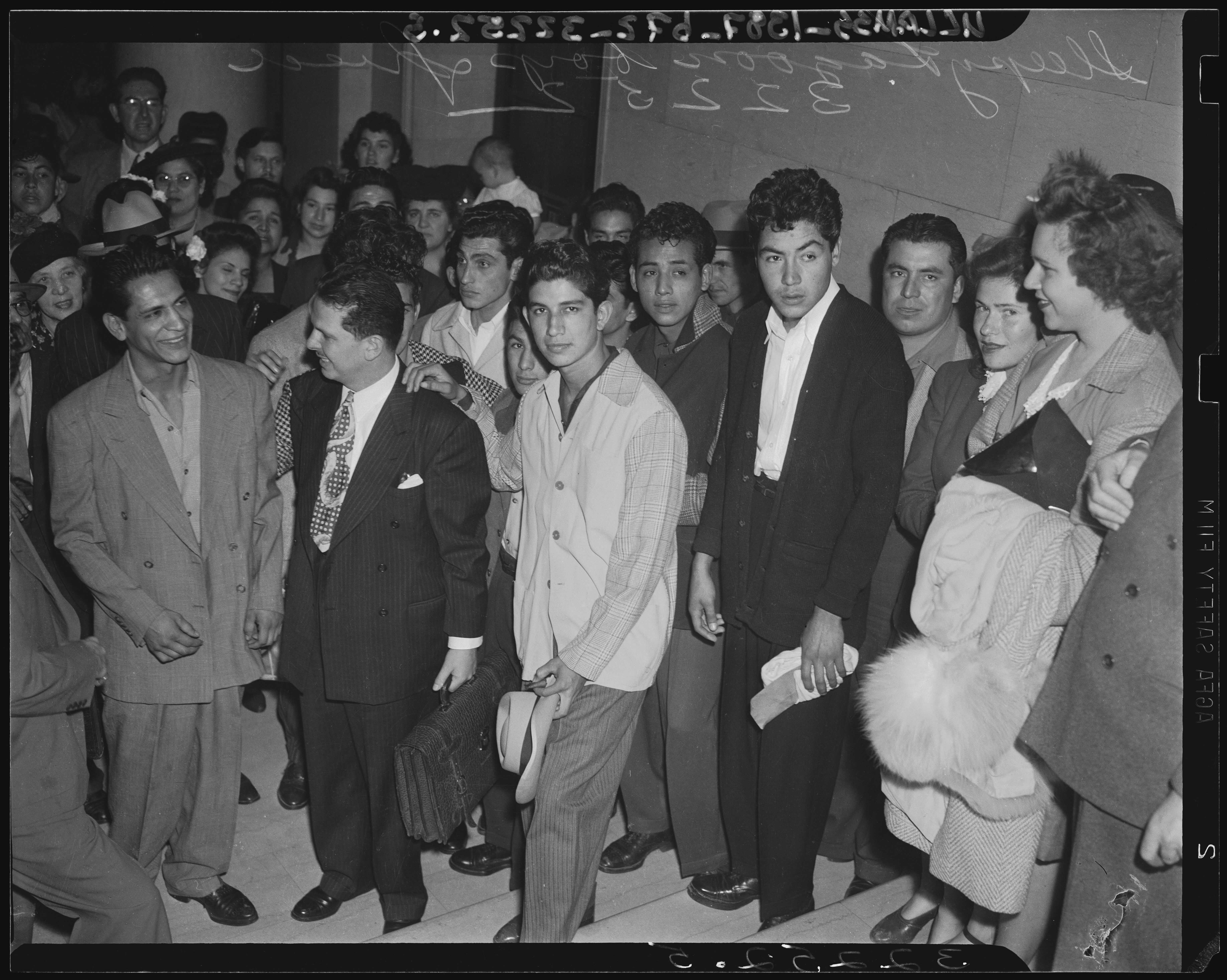
In June 1943, Los Angeles exploded, ese. For ten days, sailors and soldiers hunted young Mexican Americans through the streets, targeting anyone draped in a zoot suit. They beat pachucos and pachucas, stripped them naked, and left them bleeding on the pavement. The cops? They watched. Then they arrested the victims.
The newspapers had been working overtime, painting us as savage monsters haunting America's nightmares while good boys fought Germans overseas. It started with Sleepy Lagoon—some vato got killed in a street fight and nobody knew who did it. So the cops rounded up over 600 young Chicanos based on the threads they wore. Henry Leyvas had too much confidence, so they marked him as the ringleader and paraded our carnales through a mockery of justice.
When those sailors stripped the pachucos of their zoot suits, they were stripping them of their American identity. The message was brutal and clear: you don't belong here. But here's the thing about warriors, ese—they cannot take our dignity away. The zoot suit transformed from draped pride to targets on our backs, but the pachucos never disappeared. That defiance, that impossible style, that refusal to be erased became the foundation of everything that followed.
Webster's Dictionary defines a Pachuco as:
"a young Mexican-American having a taste for flashy clothes and a special jargon and usually belonging to a neighborhood gang."
That definition reduces pachucos to a stereotype, the same narrative that justified the 1943 Zoot Suit Riots when sailors stripped young Mexican Americans of their clothes and their dignity in the streets of Los Angeles.
But here's the truth: Pachucos were young urban warriors of the 1930s–40s who wore the zoot suit as armor and declared their American identity with pride, swagger, and impossible style. Neither fully Mexican nor assimilated Anglo, they forged their own belonging through caló slang and defiant self-invention. Like diamonds in the sky, esé.
Luis Valdez transformed the pachuco into a theatrical superhero, a master of ceremonies who could snap his fingers and control the story. Today, the pachuco stands reclaimed as a symbol of Chicano resilience, a reminder that you don't wait for belonging to be granted—you claim it with style.
The Zoot Suit Riots
Webster's Dictionary defines a Pachuco as:
"a young Mexican-American having a taste for flashy clothes and a special jargon and usually belonging to a neighborhood gang."
That definition reduces pachucos to a stereotype, the same narrative that justified the 1943 Zoot Suit Riots when sailors stripped young Mexican Americans of their clothes and their dignity in the streets of Los Angeles.
But here's the truth: Pachucos were young urban warriors of the 1930s–40s who wore the zoot suit as armor and declared their American identity with pride, swagger, and impossible style. Neither fully Mexican nor assimilated Anglo, they forged their own belonging through caló slang and defiant self-invention. Like diamonds in the sky, esé.
Luis Valdez transformed the pachuco into a theatrical superhero, a master of ceremonies who could snap his fingers and control the story. Today, the pachuco stands reclaimed as a symbol of Chicano resilience, a reminder that you don't wait for belonging to be granted—you claim it with style.